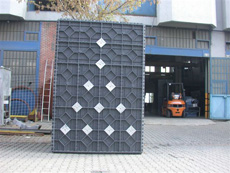
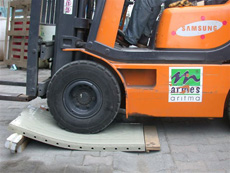
Waste Water Treatment Modules made from polypropylene
Water treatment modules made of polypropylene type Biocontainer with a capacity of 50-1000 p.e. per module

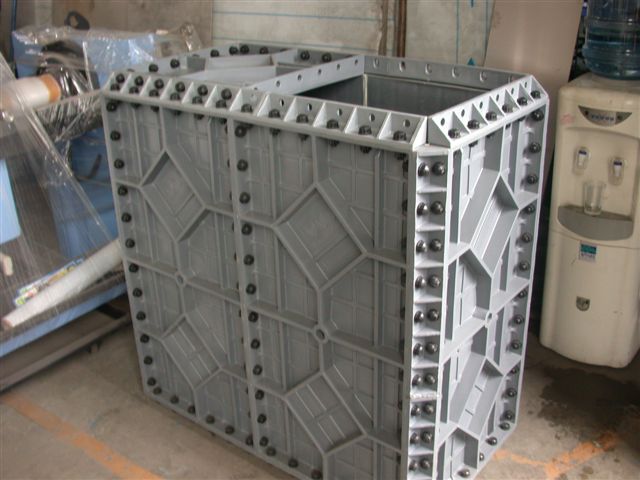
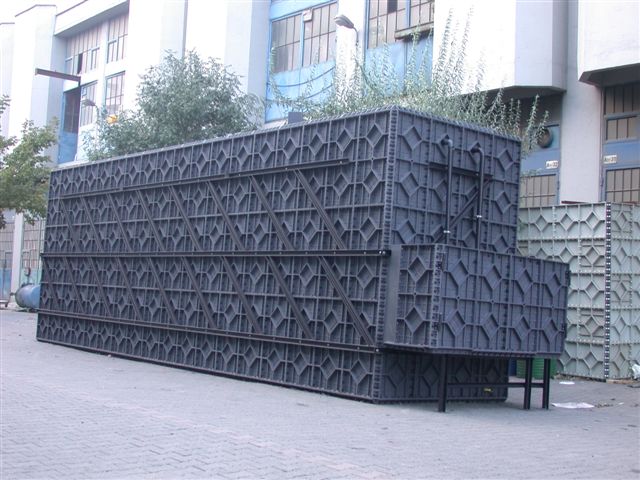
We offer water treatment modules from polypropylene, made in a specific way, with individual design specifics and requirements of the Consignee. The offered technological solutions allows the quick dismantlement when necessary to move or enlarge the capacity of the equipment.
When the installation is made the following basic decisions and principles are taken into consideration :
the equipment to satisfy the requirements of the legislation concerning the junction of the treated waste waters in the water receivers;
the equipment to be maximum compact
the expenses for building and mounting of the equipment to be very low
the operation of the equipment to be simple and to insure the functioning of the equipment in cases of irregular maintenance and the presence of hourly irregularities in the content and quantity of incoming waters;
WATER CHARACTERISTICS
|
INDEX |
VALUE |
MEASURE |
|
BOD 5 |
300 |
mg / lt |
|
COD |
600 |
mg / lt |
|
SS |
350 |
mg / lt |
|
pH |
6 – 9 |
- |
INDEXES OF THE TREATED WATER
The correct and individual planning of the equipment is a guarantee for the quality of the treated water. The waste water will be treated to the highest level after which they will be junctioned in the water receiver .
|
Index |
Value |
MEASURE |
|
BOD5 |
<20 |
mg / lt |
|
COD |
<45 |
mg / lt |
|
SS |
<30 |
mg / lt |
|
Total nitrogen |
<15 |
mg / lt |
|
Total phosphorous |
< 2 |
mg / lt |
|
pH |
6 – 9 |
- |
The structure (biocontainer) used to treat waste water is a Sequence Batch Reactor (SBR) .
The water that has entered the Reactor, with the help of the microorganisms and the bacteria there, with the constant supply of air, all are vital for the correct flow of the processes of treatment of the water. As a final product of this process the following final products are received – water, new microorganisms, carbon dioxide and stable biomass. After the completion of the process of aeration the next faze begins, the sedimentation with time approximately 2 hours. After the sedimentation the water in the upper part of the reactor with the help of a pump is passed to the sand filter after it is beforehand chlorinated (if instructed). The sand filter is used for additional clarification and improving the quality of the water.
After pumping out of the treated water the cycle of the reactor is repeated. With time the biomass increases in quantity. The excess sludge is pumped in a sludge thickener (PE entirely underground). From there the thickened sludge can be transported by a cistern, or can be passed to a belt press for dewatering.
|
Model |
Capacity of WWTP
|
Capacity of WWTP (m3/24 hr.) |
Dimensions of the b bioreactor (biocontainer ) |
||
|
B (sm) |
L (sm) |
H (sm) |
|||
|
BIOTEK P/50 |
50 |
10 |
200 |
200 |
200 |
|
BIOTEK P/100 |
100 |
20 |
200 |
350 |
200 |
|
BIOTEK P/150 |
150 |
30 |
220 |
400 |
250 |
|
BIOTEK P/200 |
200 |
40 |
220 |
500 |
250 |
|
BIOTEK P/250 |
250 |
50 |
220 |
500 |
300 |
|
BIOTEK P/300 |
300 |
60 |
240 |
550 |
300 |
|
BIOTEK P/350 |
350 |
70 |
240 |
650 |
300 |
|
BIOTEK P/400 |
400 |
80 |
240 |
750 |
300 |
|
BIOTEK P/450 |
450 |
90 |
240 |
850 |
300 |
|
BIOTEK P/500 |
500 |
100 |
240 |
950 |
300 |
|
BIOTEK P/550 |
550 |
110 |
240 |
1050 |
300 |
|
BIOTEK P/600 |
600 |
120 |
240 |
1150 |
300 |
THE CAPASITY OF THE SBR BIOKONTAINERS IS CALCULATEDED AT A WASTE RATE OF 200L/ residents per 24 hr